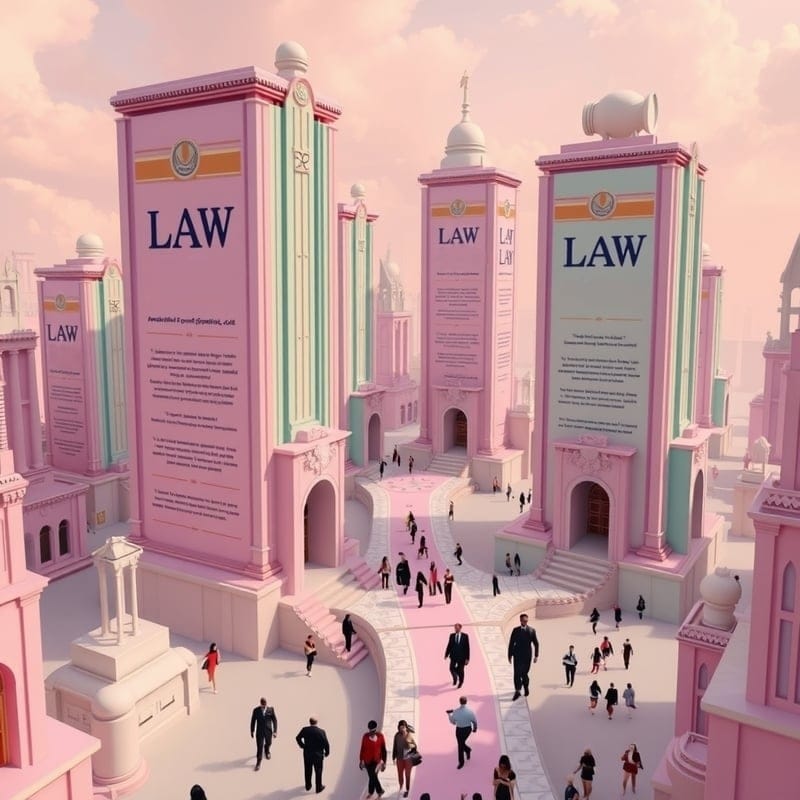
The law is not just an abstract set of rules, written in legal codes, it shapes and is shaped by physical space. The law is enforced in both visible and invisible ways, from it structuring our environments to it also controlling movement. Law materializes in physical formats. It is built into the walls, fences, surveillance cameras, and checkpoints around us. Whether it’s a protest, a border wall, or a detention centre suspending rights, legal power takes physical form in ways that shape our daily lives.
In fact, Legal norms define where people can go, what they can do, and how power operates in the built environment. Today, I will be exploring these spatial dimensions of law using the ideas of Carl Schmitt, Hannah Arendt and Giorgio Agamben, in which I will be analysing real world environments where legal power is imprinted into space.
Each theorist presents a unique lens for understanding how law shapes and controls space. Carl Schmitt argued that the fundamental role of law is to define who belongs and who does not through spatial separation. Schmitt emphasises this concept that all legal orders begin with a territorial taking that divides space and establishes boundaries. This spatial division is the prerequisite for any political or legal order. Crucial to his theory, is the concept of the ‘state of exception’, based on the idea that sovereign power has the authority to suspend legal norms when there is a perceived threat, a crisis or in zones that are considered an emergency. Schmitt’s ideas are especially relevant in spaces like borders, refugee camps and military zones, spaces where the law applies differently, or not at all.
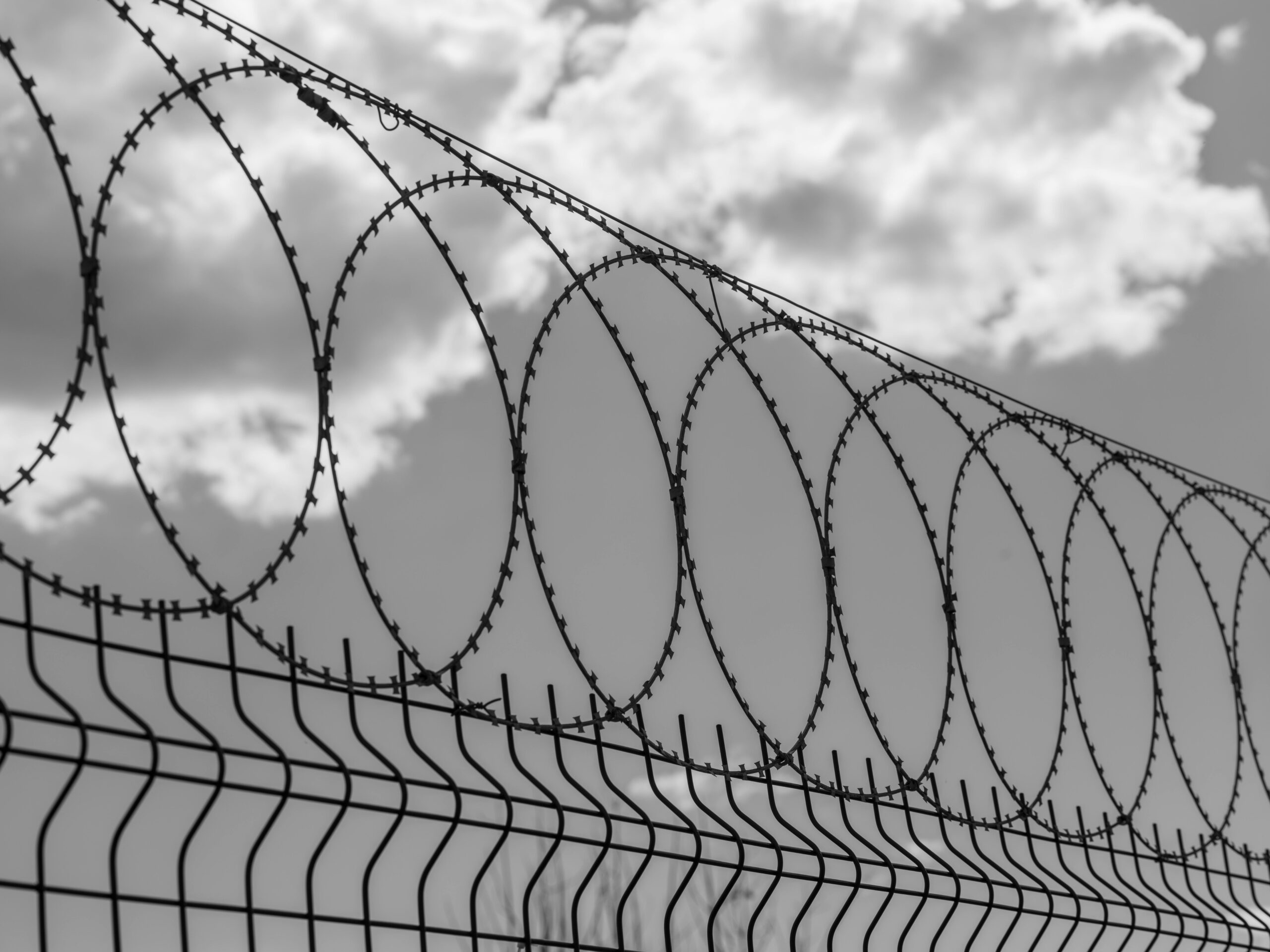
This fence is more than just a structure, it’s a legal division. It separates those with recognised legal status from those without, creating a physical and legal boundary.
In relation to Schmitt’s theory, this is a demonstration of sovereign power determining who is included within the legal order and who is excluded. Schmitt’s theory is accentuated in this image, as this fence is not just a physical barrier – it shows a legal division of people with legal rights and those without. The law applies differently for individuals on both sides of this fence.
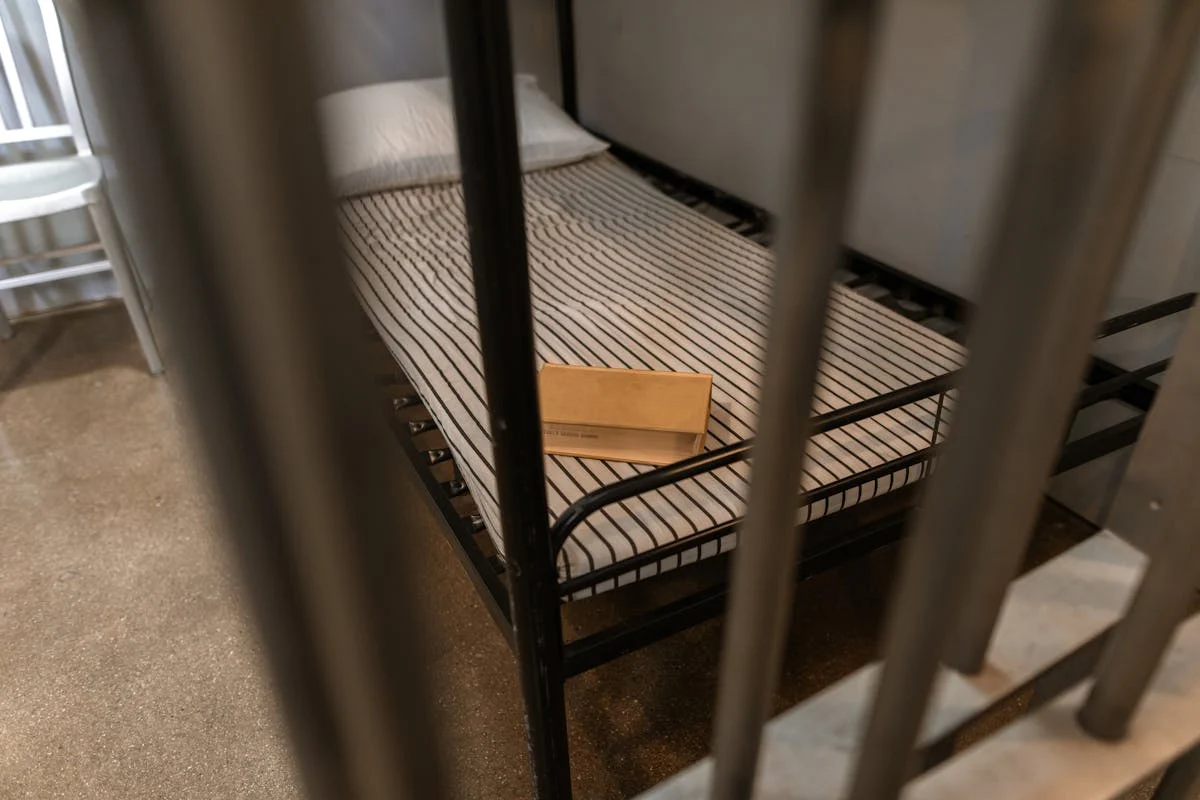
Once again Schmitt’s theory is emphasised in this image of a detention centre which demonstrates legal spatial control. The state has the power and control to decide who is detained and under what conditions. Detention centres, arguably represent a legal grey area. Although they are physically part of a state’s territory, they often operate under exceptional legal conditions. According to Schmitt, these are prime examples of sovereign power in action, spaces, where the authority to suspend or alter legal norms dictates who can be detained and under what conditions, thus reinforcing spatial boundaries and control of legal inclusion and exclusion. Furthermore, Hannah Arendt advocated that true political power arises when individuals come together in public to discuss, act, and engage with one another. Arendt emphasises how public spaces are crucial for democratic life, specifically because they provide a platform where mutual agency can be expressed freely. However, when access to these spaces is confined, this can be through legal constraints, surveillance, or policing, the potential for autonomous participation and engagement is condensed. Therefore, legal control over space becomes a form of control over political freedom itself.
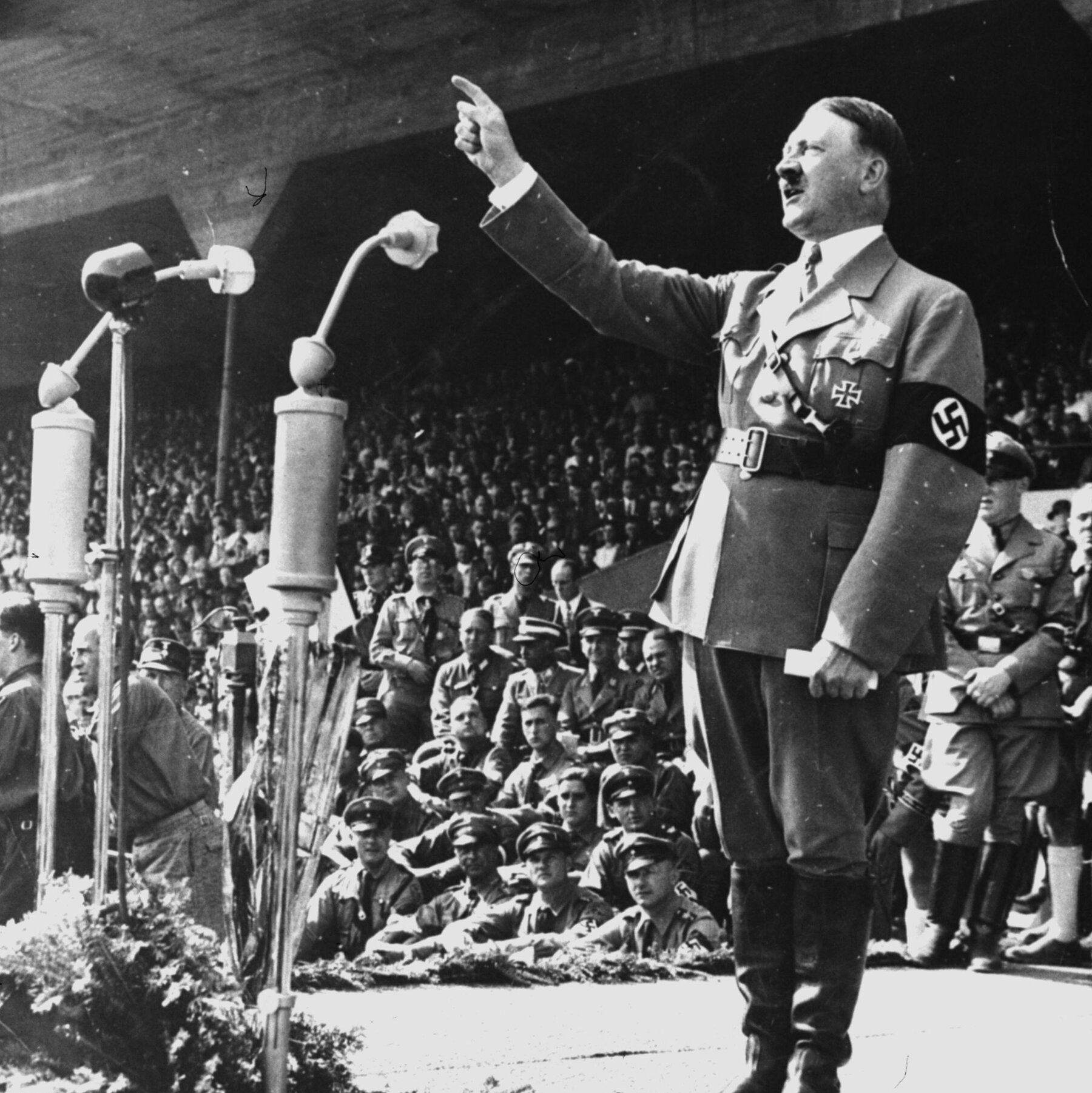
This image of Hitler’s speech raises a vital question: does surveillance in public spaces enhance security or does it repress free speech? The theorist Arendt would reason that excessive policing and surveillance turn public spaces into controlled environments, resulting in the suppression of people’s ability to engage politically. Additionally, theorist Giorgio Agamben elaborated upon Schmitt’s notion of the ‘state of exception’, to be precise he examined how modern states use emergency logic to create spaces where the law is intentionally suspended. One of Agamben’s main concepts of ‘bare life’ highlights how there are individuals who exist only biologically but are stripped of political recognition and even legal protection. In other words, these individuals are excluded from the rights of citizenship and become subjects of sovereign decision makings without the safeguards of the law. Agamben emphasises that modernity is defined by the normalisation of these exceptional spaces, spaces where the rule of law is substituted for the rule of power.
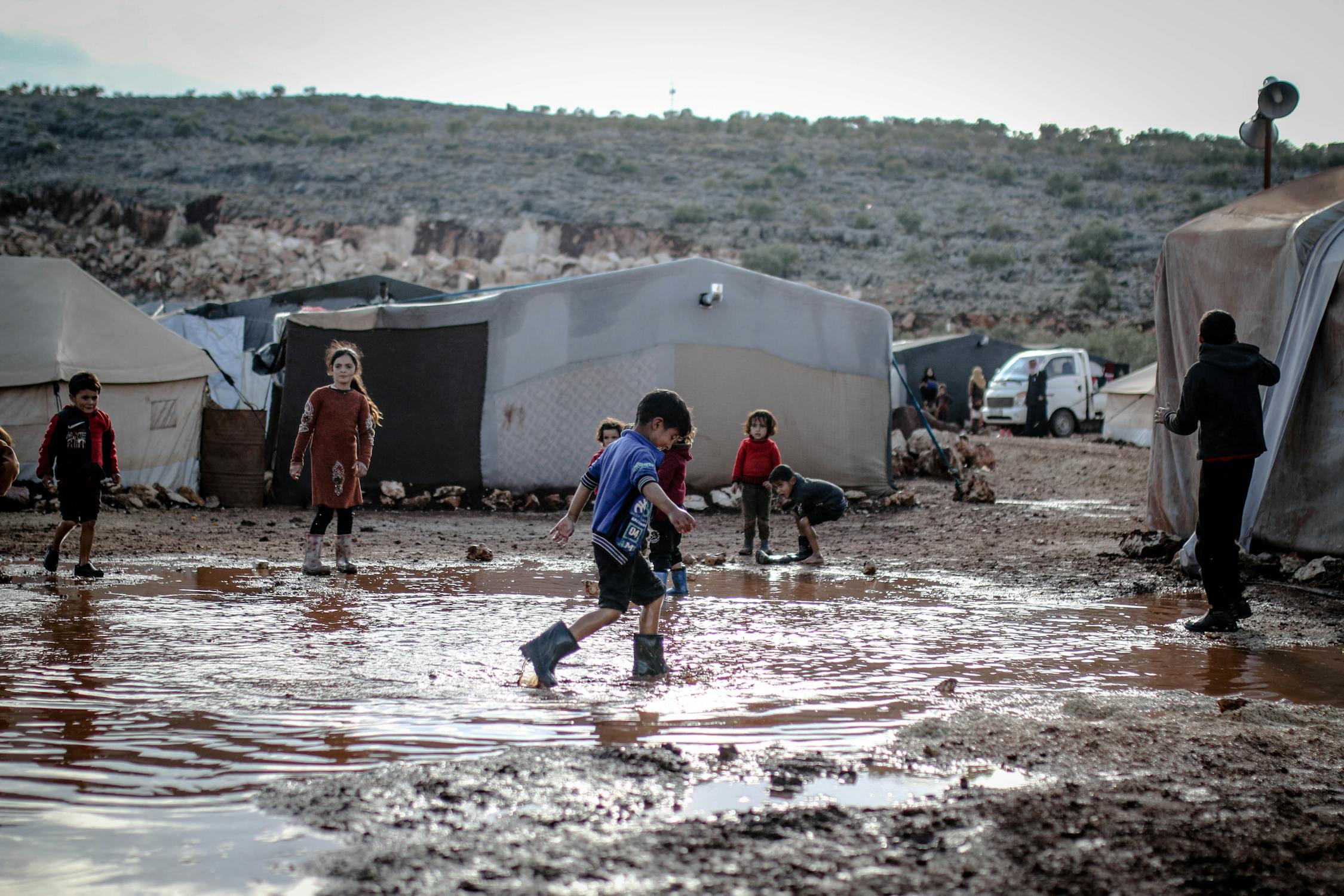
This image of a refugee camp intensifies Agamben’s concept on spaces of exception. People in refugee
camps are physically present but legally absent, in other words they have no recognised legal status and limited rights. Therefore, such a space demonstrates a place where law exists but its protections do not fully apply. Agamben would argue that refugee camps are the clearest example of the ‘spaces
of exception’. Although the people within these camps are physically present within or near sovereign territory, they appear to remain legally invisible, lacking legal status, citizenship or access to rights. Arguably, these camps function under a suspended legal framework, this essentially means that the law is present but does not fully apply. Such spaces can be said to be an environment where legal identity is
ambiguous, people are physically present but legally excluded. Individuals in such spaces are reduced to ‘bare life’ , they are manged by humanitarian aid rather than governed by democratic rights. This shows how states use space to leave some people out of legal protection, It also illustrates how space and law can be utilised together to control people’s lives by dictating who gets help and who doesn’t.
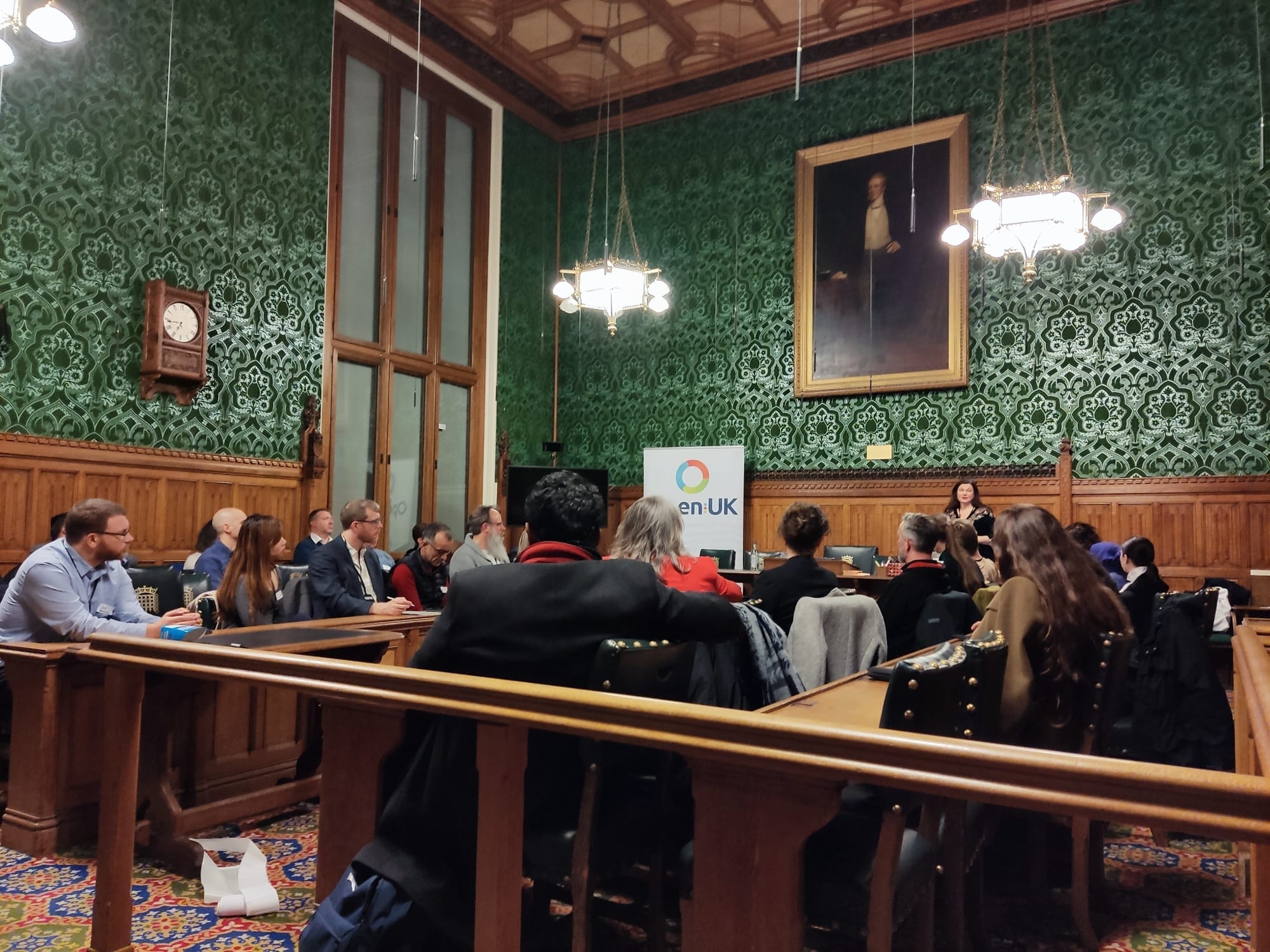
Courtrooms are another prime example of a controlled environment. They are spaces where law is practiced and performed. Arendt would argue that spatial organization, such as who speaks, who listens, who is placed where determines the dynamics of power in legal decisions. Arendt separates the concept of power from violence and domination, suggesting that true power comes from people acting collectively. For her, power is rooted in cooperation and mutual action, and it is a vital foundation for political life. Courtrooms or in this instance a conference room, are another prime example of this notion. They are spaces where law is ordained and performed. Drawing back on Arendt’s theory, spatial organisations as such – who speaks, who listens, who is placed where, determines the dynamics of power in legal decision making.