Most of us would assume ownership and control over our own physical bodies and the contents that live inside, however is it always possible to maintain ownership and control when commodification comes into play?
Having ownership over something in property law is the legal ability to possess, use and dispose of that item you have ownership over. Despite this it is also possible to not have ownership over this item and still legally able to possess this item.
An example of this is the exchange of a clothing item to the dry cleaners.

I own this shirt as I purchased it therefore, I have control over what I wish to do with my shirt. You do not own this shirt and therefore have no control over it which means you cannot tough, wear or sell it. If I were to take my shirt to the dry cleaners this would mean, there would be a bailment put in place. A bailment is the right to possess something for a purpose. As a result, the dry cleaner would have the right to possess my shirt without having ownership over it.
Do we have property rights over our bodies?
All bodies down to every cell contains DNA. This is seen as valuable and extremely personal to the individual which is where we would assume property rights over our body and what we allow it to do. DNA is not only seen as valuable to the individual themselves but to police as it can hold alcohol and drug intake and also medical researchers for the use of medical diagnosis.

However, despite the value these cells withhold, in the case of Moore v Regents of the University of California 1990 it was established that a person has no property in their body. Moore’s plaintiffs’ spleen was exercised on during cancer treatment and as a result a very valuable cell was developed from this which medical researchers used without his consent. His claim to share the profits from the research was denied since there is no property withing the human body.
It was also established in 1857 that a deceased body is not considered property. This was in the case R v Sharpe 1857 where it states that the “law recognises no property in a corpse” which was also confirmed by Williams v Williams 1882 that there can be no property in a deceased body.

Rembrandt’s Anatomy Lesson of Dr. Tulp (1632)
Demand
Despite there being no property found in human bodies, there is a demand for cells and tissue as they are found so valuable and scarce. Therefore, under the Murder Act 1752 it allowed judges to sentence convicted murders to be dissected as an extra punishment. As a result, this created a supply for medical researchers to learn more about the human body however this was then constructed as a punishment. The Anatomy Act 1832 also met this demand by allowing those in possession of an unclaimed body was able to hand it over for study for dissection as long as no relatives objected. It was found that most unclaimed bodies were the bodies of the poor because the families were unable to afford to bury their deceased.
Commodification of bodies
Commodification is the act or fact of turning something into an item that can be bought or sold. Ther are examples of people who which use human bodies as a form of raising funds.
These are:
Marc Quinn
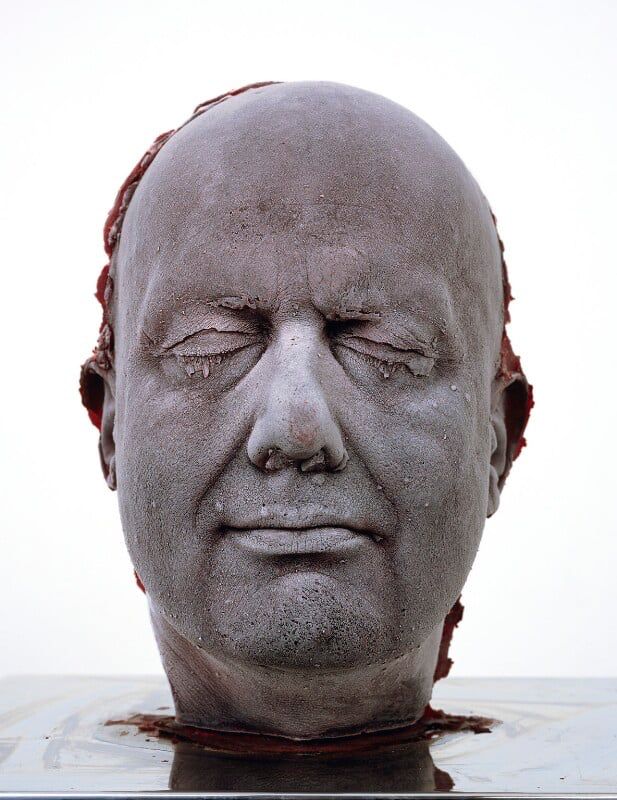
Marc Quin is a British visual artist who makes models of his own and his families head from his own blood. One of the sculptures sold for £300000 in 2012.
Body Worlds Museum
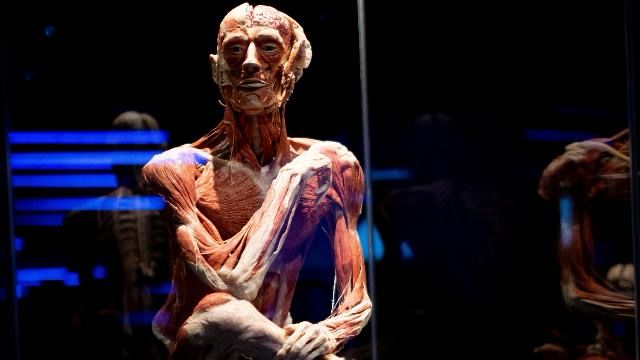
Body Worlds Museum was founded by Dr. Angelina Whalley and Dr. Gunther von Hagens with their primary goal to educate however this can be found to bring entertainment of the use of bodies. This commodification of human bodies can come across as distressing, confronting, offensive to the public.